



Plenary sessions
Plenary Sessions at ADLM 2027 will feature world-renowned experts and thought leaders whose work is shaping laboratory medicine and health care. These premier sessions offer compelling insights into the scientific, clinical, technological, and societal forces influencing the field.
The Wallace H. Coulter Awardee, Carl T. Wittwer, MD, PhD, University of Utah/ARUP Laboratories, will be featured as the first confirmed plenary speaker. Additional plenary speakers will be announced as confirmations are finalized.
Sunday, July 25
Democratizing Molecular Diagnostics
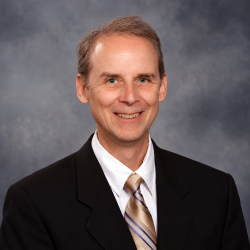
2027 Wallace H. Coulter Lectureship Awardee
Carl Wittwer, MD, PhD
Professor Emeritus of Pathology, University of Utah/ARUP Laboratories
Camden, ME, USA
Talk Description: Over the past 40 years, molecular diagnostic methods have evolved from multi-step, time-intensive protocols to simple, rapid analyses. Once limited to niche academic laboratories, molecular tools are now widely accessible. Thanks to the pandemic, nearly everyone knows what “PCR” is. Advances in simplicity include: 1) NaOH extraction or sample dilution in place of complex sample preparation, 2) real-time PCR quantification in a single step without added processing, 3) melting analysis instead of gels, 4) generic DNA dyes rather than specific probes, 5) single-base discrimination through high-resolution melting, and 6) dramatic reductions in amplification and melting times. As a practical result, both research and clinical progress are accelerating. Commercial FDA-approved products, including multiplexed syndromic panels, now offer “sample-in, results-out” workflows. As turnaround times shorten, complexity decreases, and costs decline, molecular diagnostic tools become increasingly accessible to everyone.
Biography: Dr. Carl Wittwer is Professor Emeritus of Pathology at the University of Utah and a pioneer in molecular diagnostics. He has authored more than 200 scientific publications and was the primary inventor of the LightCycler® real-time PCR system, commercialized worldwide by Roche. In the 1990s, he pioneered rapid PCR, reducing amplification times to approximately 15 minutes, and later advanced extreme PCR in under one minute and high-speed DNA melting in less than five seconds. He introduced SYBR Green chemistry, hybridization probes, and melting curve analysis to real-time PCR. Dr. Wittwer holds more than 40 U.S. patents and numerous international equivalents. He also co-founded BioFire Diagnostics, whose FilmArray syndromic diagnostic platform has achieved more than 30,000 placements worldwide and transformed infectious disease diagnostics.
AI in Medicine: Real Magic or Technological Illusions?
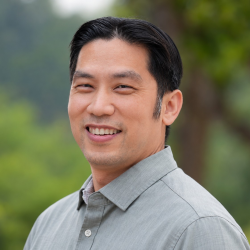
Jonathan H. Chen, MD, PhD
Associate Professor, Stanford University School of Medicine
Director for Medical Education in Artificial Intelligence, Stanford Medicine
Stanford Division of Computational Medicine; Division of Hospital Medicine; Clinical Excellence Research Center; Biomedical Data Science
Founding Site Lead, ARiSE Healthcare Network
Stanford, CA, USA
Talk Description: Pandora's box has opened in the form of publicly accessible generative AI systems, now applied to every imaginable—and many unintended—purpose. These emerging technologies challenge the fundamental theorem of informatics: that the combination of human and machine outperforms either alone. When AI alone can match or surpass human–computer teams in complex medical reasoning, we are compelled to reconsider the foundations of clinical expertise. With a global shortage of medical professionals and overwhelming demand for care, AI’s potential to democratize knowledge, expand access, and restore efficiency is both inspiring and urgently needed. These advances compel us to ask: What makes a doctor a doctor—or any professional truly human—in this new era? Confronting these existential questions will have profound implications for practice, pedagogy, and policy.
Biography: Jonathan H. Chen, MD, PhD, leads a clinical informatics research group focused on empowering individuals with the collective experience of many, combining human and artificial intelligence to deliver better care than either alone. He also serves as Director of Medical Education in Artificial Intelligence for Stanford Medicine. Before medical training, he co-founded a company that translated his computer science graduate work into an expert system used worldwide. He continues to practice medicine as an attending physician, both for the tangible rewards of caring for real people and to keep his research grounded in clinical reality. His work advances science and technology while redefining how we prepare an entire generation of the healthcare workforce to integrate intelligent systems safely and effectively. His expertise has been featured in the popular press, and he has received awards from the NIH, ARPA-H, the American Medical Informatics Association, and the International Brotherhood of Magicians, in addition to authoring more than 100 publications.
Metagenomics for Infectious Disease (Title to be determined)
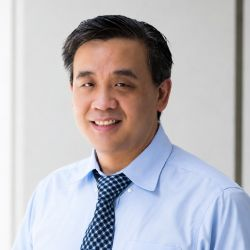
Charles Chiu, MD, PhD
Professor, Laboratory Medicine & Infectious Diseases
UCSF Viral Diagnostics & Discovery Center
San Francisco, California, USA
Biography: Charles Chiu, MD, PhD, is Professor of Laboratory Medicine and Medicine (Infectious Diseases) at the University of California, San Francisco, and Co-Director of the UCSF Clinical Microbiology Laboratory. He leads a translational research program focused on developing and validating metagenomic next-generation sequencing (mNGS) and host response profiling technologies for infectious disease diagnosis, outbreak investigation, and pathogen discovery. A pioneer in clinical mNGS testing, he helped develop FDA-designated breakthrough assays for pathogen detection from cerebrospinal fluid, plasma, and respiratory samples. His research also applies machine learning and RNA gene expression profiling to improve the diagnosis of acute infections, including meningitis, encephalitis, and sepsis, as well as chronic conditions such as Lyme disease, chronic fatigue syndrome, and long COVID. Dr. Chiu has authored more than 200 peer-reviewed publications, holds over 15 patents and patent applications, and is a co-founder and scientific advisor to several biotechnology companies advancing infectious disease diagnostics.
Implementation Science + Patient Outcomes (Title to be determined)
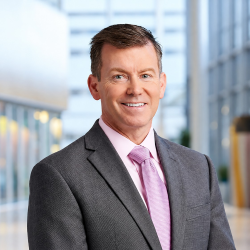
Peter Pronovost, MD, PhD, FCCM
Chief Quality & Clinical Transformation Officer
University Hospitals, Case Western Reserve
Cleveland, Ohio, USA
Biography: Peter Pronovost, MD, PhD, FCCM, is a nationally recognized physician executive, critical care physician, researcher, and patient safety leader with more than 1,000 peer-reviewed publications. He is best known for pioneering the use of checklists to reduce central line-associated bloodstream infections, cutting infection rates by 80% and saving thousands of lives. His work has earned numerous honors, including recognition as one of Time magazine’s 100 most influential people and a MacArthur Foundation “genius grant.” As Chief Clinical Transformation Officer at University Hospitals Health System and Professor at Case Western Reserve University, Pronovost has led initiatives that improved quality while reducing Medicare patient care costs by 30%. Previously, he served as Senior Vice President for Patient Safety and Quality at Johns Hopkins and founded the Armstrong Institute for Patient Safety and Quality. A member of the National Academy of Medicine, he continues to advise national and international organizations on healthcare quality, safety, and innovation.
Neuroproteomics of Alzheimer's disease (Title to be determined)
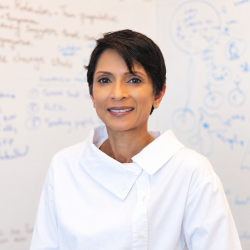
Judith A.J. Steen, PhD
Professor of Biology, Harvard Medical Scool
Cambridge, Massachusetts, USA
Biography: Dr. Steen is a Professor of Neurobiology at Harvard Medical School, a member of the Harvard Stem Cell Institute, and Director of the Neuroproteomics Laboratory at Boston Children’s Hospital. Her research focuses on understanding neuroregeneration and neurodegenerative diseases through systems biology, integrating proteomics, transcriptomics, and computational approaches. Her laboratory develops innovative quantitative methods and bioinformatics tools to study regeneration and neurodegeneration in mouse models, stem cells, and human tissues. This work aims to identify biomarkers and therapeutic targets for neurodegenerative diseases. Using biochemical, molecular, and cell biology techniques, her team validates and investigates the biological roles of these targets in injury and disease. The ultimate goal of her research is to leverage advanced proteomics and molecular insights to promote regeneration, slow neurodegeneration, and advance the development of effective therapies for neurological disorders.